Solo content has traditionally occupied a secondary role in World of Warcraft, serving as a bridge between group activities rather than a destination in its own right. With the introduction of Torghast, Blizzard made a notable attempt to elevate solo focused gameplay into a repeatable, progression driven system. The results were divisive, but instructive.
This article examines what Torghast revealed about solo content design, why it succeeded in some areas and failed in others, and how future systems could build on its foundations without repeating its mistakes.
The Historical Role of Solo Content
For most of the game’s history, solo content functioned as preparation rather than fulfillment. Daily quests, world quests, and story scenarios were designed to support group play by providing gear, currency, or narrative context. These activities were intentionally limited in depth, ensuring that the most meaningful rewards remained tied to cooperative content.
This design reflected an assumption that long term engagement required social interaction. Solo play was tolerated, but rarely treated as a complete experience. As player demographics diversified and time availability became more fragmented, this assumption increasingly conflicted with reality.
Torghast as a Design Experiment
Torghast represented a deliberate departure from traditional solo content. It introduced scaling difficulty, randomized powers, and repeatable runs, positioning itself closer to a roguelike structure than a quest hub. For the first time, solo progression was framed as a system rather than a checklist.
This approach offered genuine agency. Players made meaningful choices during runs, adapted to emergent challenges, and experienced varied outcomes. At its best, Torghast captured a sense of mastery and experimentation that solo content had rarely achieved before.
Where Torghast Struggled
Despite its ambition, Torghast suffered from structural tensions. Mandatory participation tied to progression transformed optional experimentation into obligation. What might have been an engaging challenge became a source of pressure, particularly when balance issues amplified frustration for certain classes.
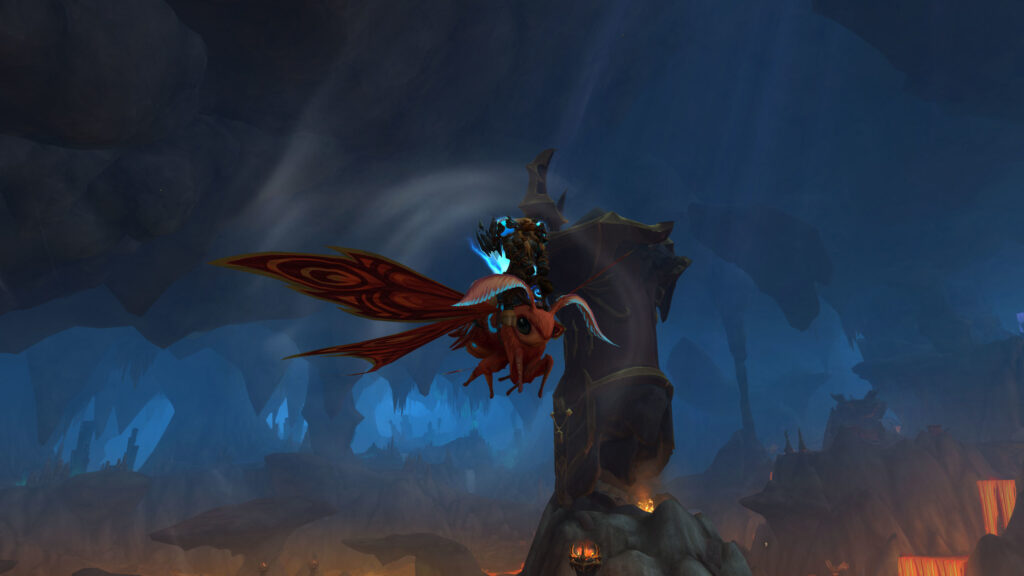
Repetition without sufficient novelty further eroded goodwill. When runs felt similar despite procedural variation, the system’s strengths were overshadowed by fatigue. These issues highlighted the risk of forcing systemic content into a rigid progression framework.
Key Lessons from Torghast’s Reception
- Solo systems thrive when participation feels optional rather than mandatory
- Meaningful choice must be paired with sufficient variability to avoid fatigue
- Balance disparities are more visible and frustrating in solo environments
- Progression rewards should enhance motivation without enforcing obligation
- Failure states must feel instructional rather than punitive
Potential Directions for Future Solo Systems
Future solo content can succeed by decoupling experimentation from necessity. Systems that reward engagement without gating power allow players to opt in based on interest rather than pressure. Cosmetic progression, account wide unlocks, and narrative rewards are particularly well suited to this approach.
Additionally, embracing modular design could reduce fatigue. Shorter sessions, rotating rule sets, and class specific variations would preserve freshness while respecting time constraints. Solo systems should accommodate diverse playstyles rather than enforcing uniform expectations.
Conclusion: Solo Content as a Legitimate Pillar
Torghast demonstrated both the promise and the peril of elevating solo content beyond filler. Its successes proved that players are willing to invest deeply in solo systems when those systems offer agency, challenge, and replayability. Its failures revealed the consequences of tying such systems too tightly to mandatory progression.
The future of solo content lies in treating it as a legitimate pillar alongside raiding, dungeons, and PvP, not as a substitute or obligation. By learning from Torghast rather than abandoning its ambitions, Blizzard has an opportunity to redefine solo play as a meaningful and enduring part of the game’s ecosystem.